
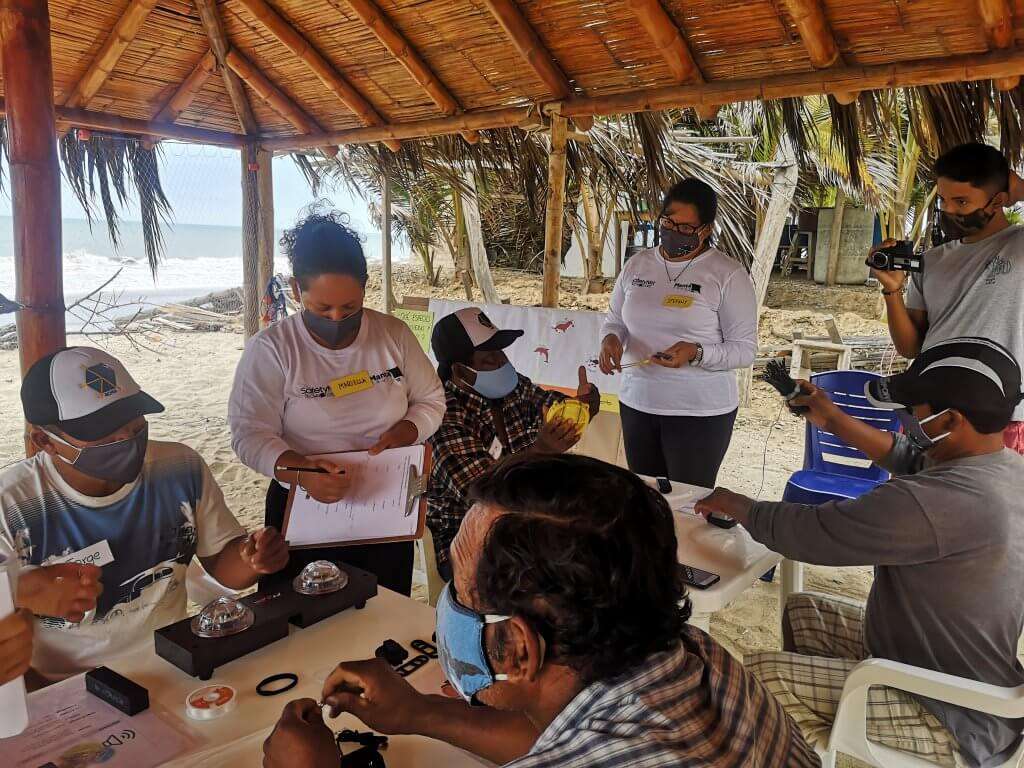
- Project: Achik
- Role: Project Manager and HCD Lead (SNTech)
- Sponsor: Innovate UK GCRF
- Team: SafetyNet Technologies, The Manta Trust
- Credits: UK: Peter Alexander, Bianca Bazin, Naomi Gold, Larissa Kunstel-Tabet, Steve Lee. Peru: Claudia Ampuero, Eliane Cohen, Rosario Escobedo, Lucia Florez, Alejandra Mendoza, Stefany Rojas, Mariella Scarpati
Objective:
In January 2020 SNTech won a Demonstrate Impact Global Challenges Research Fund (GCRF) project through Innovate UK.
The current offering of SafetyNet Technologies (SNTech) is a partnership and subscription model using bycatch reduction lights. This offering is calibrated towards the industrialised fishing sector in highly developed and monitored fisheries.
Our target market for the Achik project was dramatically different. The artisanal fishing sector in Peru is much more fragmented, informal and has different economic, cultural and
social characteristics – it is a subsistence lifestyle for most, rather than the profit-generating businesses SNTech traditionally targets.
Many aspects that make our existing partnerships viable, including monitoring, fines, government policing, sustainability and conservation policies and incentives to reduce bycatch are absent or drastically less influential to fishing practices. These are having a largely detrimental effect on the livelihoods of fishers, the incidences of bycatch and the sustainability of fishing stocks.
We wanted to understand:
How valued by Peruvian artisanal fishers and stakeholders, is technology that sorts wanted and unwanted catch before hauling?
How might this technology be made accessible to sustain livelihoods, fishing stocks and protected species?
Our goal remains the same – to identify feasible, sustainable ways to introduce our product and services which protect against bycatch, reduce catches of endangered species, and help fishers to work more sustainably.
Preparation:
In January 2020 SNTech won a Demonstrate Impact Global Challenges Research Fund (GCRF) project through Innovate UK. The plan was to work with the Manta Trust to send an HCD research team out to Peru to interview stakeholders in Zorritos and Mancora about bycatch reduction technologies.
One month before preparing to travel. Lockdown Hit. And the project was put on pause.
In August 2020 it went live again but with a major change. We were in a global pandemic and international travel was heavily restricted.

Overcoming Covid-19
We assembled a team of local researchers, and decided to conduct the HCD research remotely. The SNTech Team expanded to accommodate the increased complexity of the project and Steve Lee, service designer joined the team as lead designer.
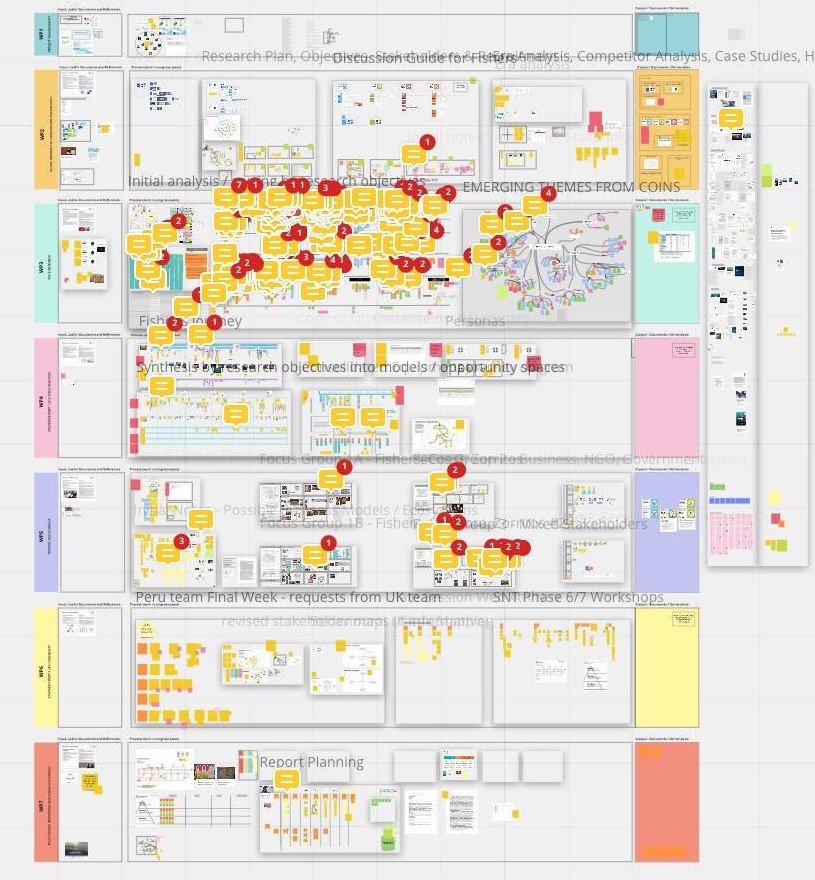
We needed to pivot our thinking to one that was in field, to one that was remote, and used online tools to ensure effective communication between the London and Peruvian teams. A master Miro board was set up, following the workflow and work packages of the project.
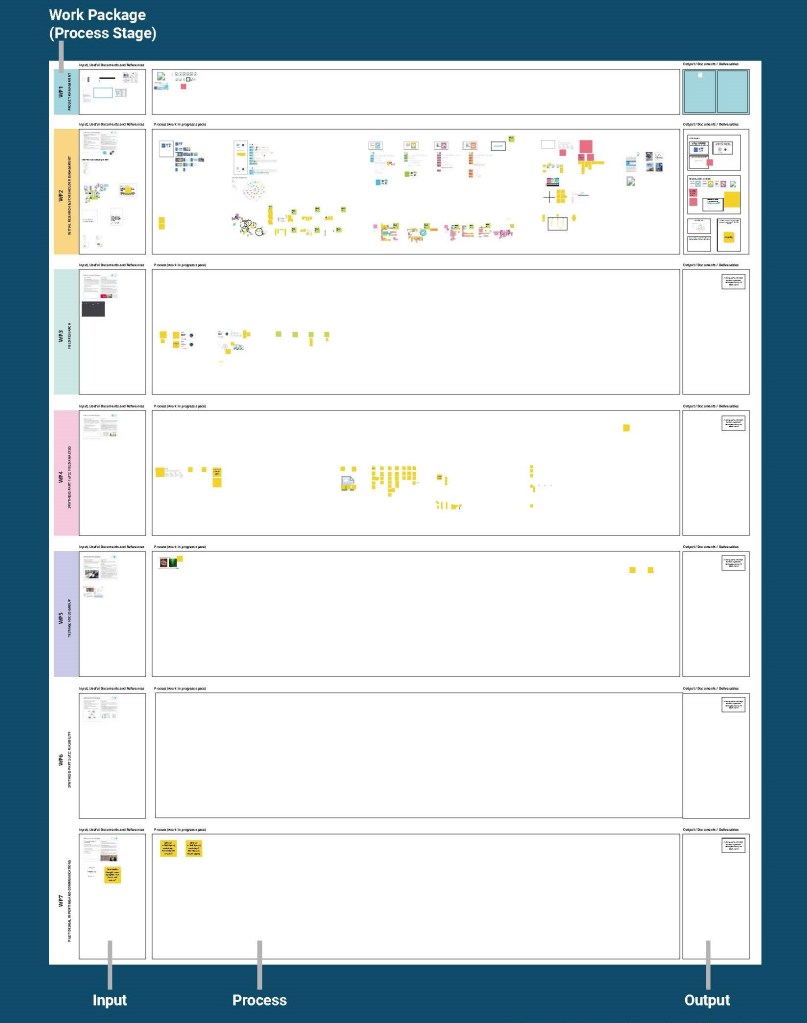
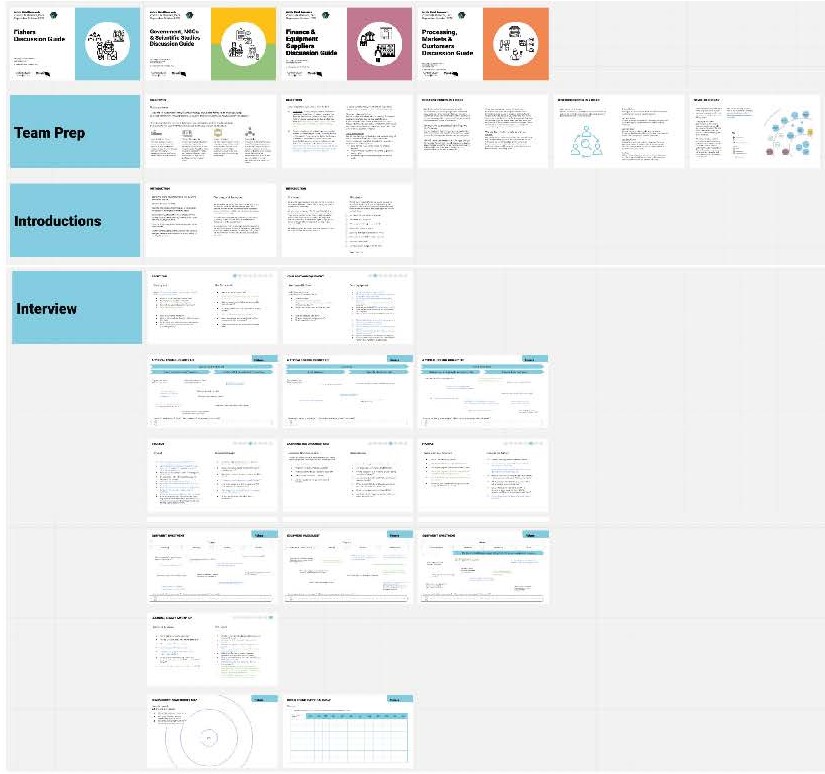
In addition we trained the in field team in design research and various research and sensemaking methodologies. Creating discussion guides for the various stakeholders, including the fishers themselves, local government and NGOs, Finance and service providers, and processors, customers, and the wider stakeholder communities.
Understand
Through the course of the project the team conducted over sixty interviews, and using COINS (Challenges, Opportunities, Insights, Needs and Systemic Issues) analysis were able to identify convergent themes around the topics of incidental catch, sustainability, lifestyle and livelihood, technology and fishing.
In parallel to the activities in Peru, the team in the UK did extensive desk research into the artisanal sector, different services and implementation models that might work in an artisanal context, and an era analysis of the fishing industry on the whole, to see where the industry may be heading.

Imagine
In the synthesis phase we created many diagrams to communicate the information gathered in an efficient way. This included a stakeholder map, fishermen’s journey, financial flow analysis and emerging themes map.
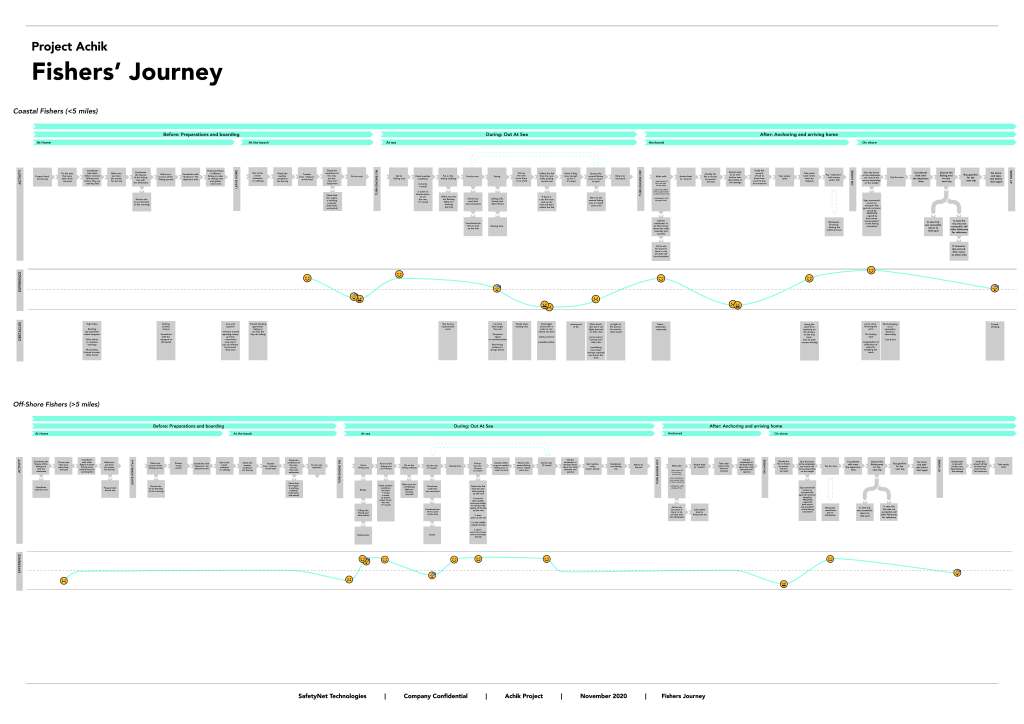
The synthesis of the primary research resulted in a series of “How Can We” propositions.
Beyond explaining what the situation currently is, they are positioned to prompt a consideration of what action we can take to move forward.
When shared with stakeholders in Peru they provided evidence that we were
listening and appreciating everything they were sharing with us, and mirroring
back our impressions of what the opportunities and challenges were.
Iteration
Three services and business models were designed to test with various stakeholders in group workshop sessions. The outcomes of which helped us understand which would be effecting in this context. By bringing together people from different groups were were able to introduce a dialogue to understand the extent to which they would be happy to work together towards more sustainable fishing practices.

Outcome
Through the extensive work undertaken in the four months of the project SNTech’s pipeline was filled with avenues to explore, from new services to product R&D. The opportunities were identified and measured against a decision tree created specifically for the project and taken forward on consequent ones, to ensure the viability of the new development, be it a service or new product.
Find out more about this project and its outcomes via Steve Lee’s excellent account.
 Larissa KT